WARNING: The FAA Just Made It A $75,000-Per-Violation...
It's A Crime To Fly Your Drone Without This...
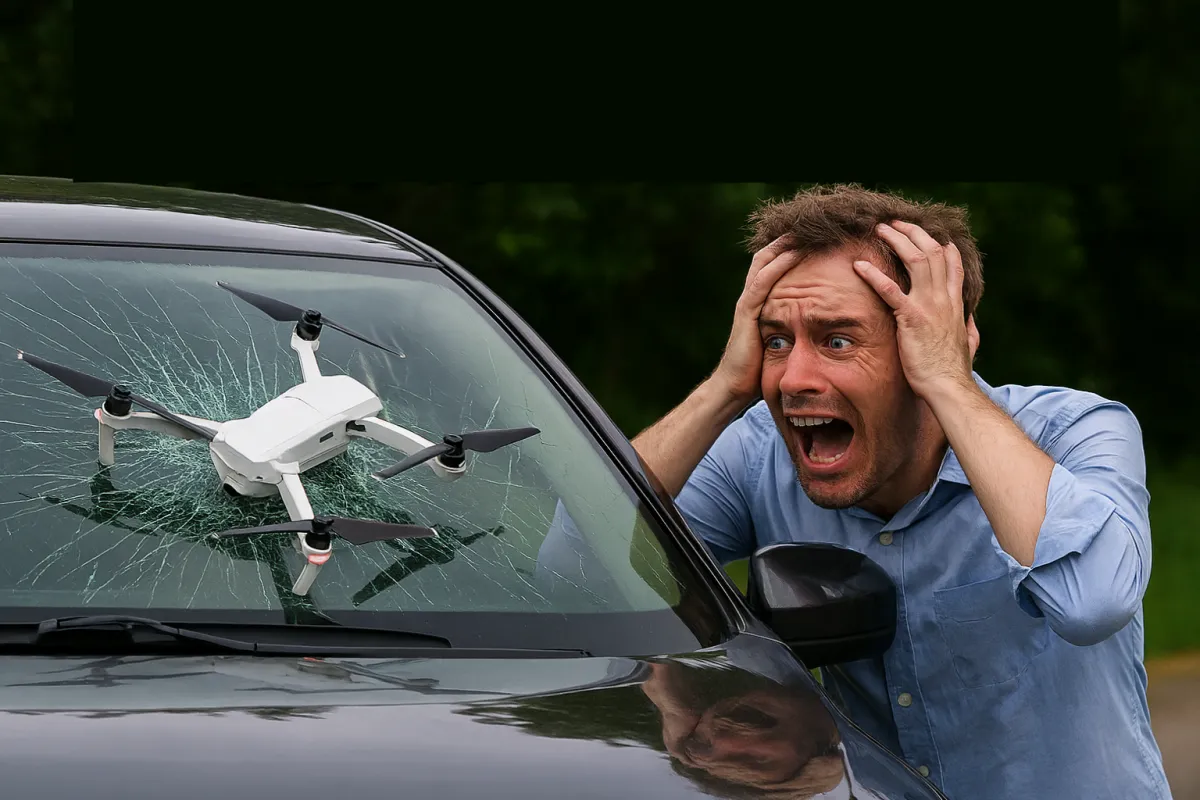
He Had No Idea His Drone Was About To Cost Him Everything
Most new drone owners never progress beyond tentative hovering in their backyard. Not because they lack interest — but because nobody ever gave them the same safety framework that professional operators use. Until now.
Michael DiCiurcio loved flying drones. He even built a YouTube channel around it — thousands of subscribers watching him capture footage over Philadelphia.
Then the FAA showed up.
123 violations. $182,004 in proposed fines. And in February 2024, he pleaded guilty. He didn't just lose the money. He lost his drones. He lost his channel. And he signed an agreement that he will never operate any drone of any kind, anywhere in the United States, ever again.
He wasn't a criminal. He was a hobbyist who didn't know the rules.
And here's the part that should make you stop and read every word of this letter...
The FAA doesn't care if you didn't know.
The Most Deafening Sound In The World Is The Sickening Crunch...
Followed By Total Silence
It happens in a heartbeat. One second you're capturing the perfect shot. The next, you're watching $2,000 of technology plummet toward the pavement.
But the crash itself? That's not even the expensive part anymore.
In May 2024, President Biden signed the FAA Reauthorization Act of 2024 (Public Law 118-63). Buried inside that legislation is a single line that every drone owner needs to know about:
Fines up to $75,000. Per violation.
Not per incident. Per. Violation.
A Minnesota realtor found out the hard way — $39,700 just for taking aerial photos of houses without the right paperwork. A guy at the Sunfest Music Festival in West Palm Beach flew his DJI Mavic 2 Pro over the crowd, hit a coconut tree, and walked away with a $20,370 fine and no certificate to show for it.
And in 2024 alone, the FAA proposed $341,413 in civil penalties against 27 drone operators. Ordinary people. Just like you.
Most of them had one thing in common: they didn't know what they didn't know.
Most New Drone Owners Never Progress Beyond
Tentative Hovering In Their Backyard
Not because they lack interest. Because they lack a systematic safety framework.
The manufacturers give you a quick-start guide. YouTube gives you conflicting advice. And when something goes wrong mid-flight — and something always goes wrong eventually — you're left scrambling while your expensive investment drifts toward disaster.
And now? Disaster has a price tag. A big one.
What I'm About To Share With You Is The Line In The Sand
It is the difference between becoming a confident, skilled pilot who actually enjoys the freedom of flight...
...or joining the thousands of people who end up with expensive paperweights, FAA letters, and regrets collecting dust in their closet.
⚠️ It's More Than Just The Cost — It's The Hidden Gotchas That Haunt Every Flight:
⚠️ The paralyzing uncertainty of not knowing if your next takeoff is a routine flight or a countdown to a total system fly-away you're powerless to stop.
⚠️ The looming anxiety of crashing in front of a client or a crowd — turning a professional shoot into an expensive, embarrassing display of amateur guesswork.
⚠️ The cold sweat of wondering if that last flight violated FAA regulations — and whether a $75,000-per-violation fine is already in the mail because you didn't understand the airspace restrictions.
Here's What The Drone Companies Never Put In The Manual ...
And The Brutal Truth Nobody Talks About Is...
Most drone companies sell you on the magic of flight.
They show you the gorgeous aerial footage. The sweeping landscapes. The cinematic shots.
What they don't show you? The FAA investigator's email. The five-figure fine. The guy in Little Rock who watched his drone get swallowed by helicopter rotor wash and crash to the ground — then opened a letter from the FAA proposing a $5,000 fine for a flight that lasted maybe four minutes.
The FAA doesn't care if you're a hobbyist. When you're in the air, you are a pilot — period.
Without a professional-level safety system, you aren't flying.
You're gambling.
And in aviation... hope is not a strategy.
Let Me Show You What "Figuring It Out Yourself" Actually Looks Like
Most people blame the wind when their drone goes down.
The data tells a different story.
FAA safety reports and crash analysis show the real culprits are usually buried deep in your settings — technical "red zones" that professional pilots know about but that most manuals never bother to explain in plain English.
🔴 The "Return to Home" Altitude Trap Your drone's default "safe" altitude setting sounds protective. It isn't. In the wrong environment, it can steer your craft directly into power lines, tree lines, or building structures the moment something goes wrong and it tries to come back to you. The FAA has documented multiple crashes traced directly to this single misconfiguration.
🔴 IMU Interference — The Invisible Killer Hidden metal objects near your launch site scramble your drone's internal compass before you even leave the ground. You don't know it's happening. Your drone doesn't tell you. It just... behaves oddly. Then badly. Then not at all.
🔴 Fail-Safe Logic Conflicts Here's the one that gets people: your drone's automatic safety behavior — the feature specifically designed to protect you — can actually trigger a fly-away if your specific terrain logic hasn't been manually configured. The feature meant to save you becomes the thing that kills the flight.
These aren't edge cases. They're patterns. Documented in FAA safety bulletins, manufacturer technical manuals, and professional pilot forums — over and over again.
The problem isn't that you're careless.
The problem is that nobody compiled this information into something you could actually use before your first flight.
I Didn't Stumble Onto These Red Zones. I Went Looking For Them.Let Me Show You What "Figuring It Out Yourself" Actually Looks Like
My name is Jonathan Bell.
I need to be upfront with you from the start:
I am not a professional drone pilot. I've never flown commercially. I'm not a certified flight instructor. I'm not an aviation attorney.
What I AM is a businessman and researcher with 20+ years of experience doing one specific thing extremely well: taking complex, scattered information and organizing it into systems people can actually use.So when I started seeing the pattern — beginner buys drone, beginner crashes drone, beginner gets FAA letter, beginner loses thousands — I did what I always do.
I went to the source.
Over 100 hours of research:
📄 FAA regulations and safety bulletins — directly from faa.gov
📄 Manufacturer technical specifications — from official DJI, Autel, and Skydio documentation
📄 Part 107 commercial certification training materials
📄 Professional pilot procedures from industry forums and operator guidelines
Here's what the data reveals:
Most drone crashes aren't caused by pilot error or bad weather. They're caused by something manufacturers barely mention in their manuals: sensor conflicts.
Your drone is a flying computer running GPS, compass, obstacle detection, and barometric pressure sensors simultaneously. When those sensors disagree with each other — and professional pilots report this happens more than anyone admits — the software has to make a choice.
And the data shows it sometimes makes the catastrophically wrong choice while you watch helplessly from the ground.
The information to prevent this EXISTS. It's in FAA safety bulletins. It's in manufacturer technical specs. It's buried in professional pilot forums.
But it's scattered across hundreds of sources, written in technical jargon, buried in 400-page manuals that engineers wrote for other engineers.
The YouTube "experts" contradict each other. The manufacturer quick-start guides skip the critical safety protocols. And hobbyist advice is often dangerously incomplete.
That's when I realized: someone needed to [ut all of this into one organized, beginner-friendly guide.
That's exactly what I did.
So I Did What Any Researcher Does When They See A Problem Nobody's Fixing... So, I Compiled The Solution Myself
Not because I'm an expert pilot. Not because I have FAA credentials.
Because I'm a businessman with 20+ years of organizing complex, scattered information into systems people can actually use — and this problem was screaming for exactly that.
The result is The Complete Beginner's Guide to Drone Safety.
Not a system I invented. A comprehensive compilation of the critical safety information that already exists — pulled from FAA regulations, manufacturer technical manuals, and commercial operator training materials — and organized into one beginner-friendly guide you can reference before every single flight.
EXCLUSIVE BONUSES — Only Available With Your Order Today:
🎁 BONUS #1: Quick-Reference Emergency Card (Value: $12) Laminated pocket card — the most critical emergency procedures in one place. Keeps in your drone case. There when seconds count.
🎁 BONUS #2: Pre-Flight Checklist Audio Guide (Value: $17) Audio walkthrough of the complete pre-flight checklist. Listen while you prep your drone so you never miss a step.
🎁 BONUS #3: Monthly Airspace Alert Updates (Value: $97 year Email notifications when new TFRs or airspace restrictions hit your area. The FAA's temporary flight restrictions change constantly — and your app might not catch them all. This does.
Total Bonus Value: $126 These are only available with your order today and won't be sold separately.
Here's Exactly What's Inside — Six PDF Modules, Delivered Instantly:
📋 MODULE 1: Emergency Response Procedures
Remember the pilot in Little Rock who watched his drone get swallowed by rotor wash and crash? He had no idea what to do. His hands froze. By the time he reacted, it was over.
This module gives you the manufacturer-approved manual override commands for when your GPS fails or sensors malfunction — extracted from the technical manuals of the most popular drone models (DJI, Autel, Skydio) and organized into simple step-by-step sequences you can execute in seconds.
Not new techniques I invented. The emergency procedures that already exist in those 400-page manuals — finally in plain English.
📋 MODULE 2: Pre-Flight Safety Checklist
The same comprehensive pre-flight checklist commercial operators use to catch problems before takeoff.
GPS calibration. Compass alignment. Sensor verification. Environmental assessment. All of it — compiled from Part 107 training materials and commercial operator standard procedures.
The kind of systematic check that could have prevented the Orlando drone light show disaster, where a pilot uploaded the wrong flight path files, never checked his setup, continued the show when drones started failing... and a seven-year-old child ended up in the hospital needing open heart surgery.
One checklist. Before every flight. Changes everything.
📋 MODULE 3: FAA Compliance Guide
Plain-English translation of the FAA regulations that apply to YOU — recreational and commercial alike.
Includes the official airspace verification process, Remote ID requirements, and the pre-flight documentation that proves your due diligence if you're ever questioned.
Remember: the Minnesota realtor didn't think he needed this. He was just taking photos of houses. $39,700 later, he thought differently.
📋 MODULE 4: Weather & Environment Assessment
Compiled guidelines from FAA safety bulletins and manufacturer specifications for evaluating wind conditions, signal interference, and environmental hazards.
The professional thresholds commercial operators use for go/no-go decisions — based on your specific drone model's technical specs. Not YouTube guesswork. Documented standards.
📋 MODULE 5: Flight Planning & Path Mapping
Professional flight planning techniques from commercial operator training manuals and Part 107 best practices.
How to map safe flight paths, avoid "Return to Home" traps, maintain legal buffer zones, and pre-identify emergency landing zones — before you ever power up.
The Super Bowl operators who racked up $16,000+ in fines? They flew into restricted airspace they didn't even know existed. Proper pre-flight path planning is exactly what catches that before it costs you.
📋 MODULE 6: Troubleshooting & Maintenance Guide
A centralized reference organized by symptom — so when something looks wrong, you know what it means and what to do.
Common sensor errors, warning messages, maintenance procedures — all compiled from manufacturer technical manuals. No more Googling mid-flight. No more guessing.
Here's The Difference Between What You're Doing Now And What You'll Have:
The potential costs of un-informed operation:
❌ Random YouTube videos with conflicting advice
❌ 400-page manufacturer manuals written by engineers for engineers
❌ Trial-and-error learning that risks expensive crashes
❌ Guessing whether you're breaking FAA regulations
❌ Panicking when something goes wrong mid-flight
❌ Your expensive drone gathering dust because you're
too nervous to fly
❌ 100+ hours of research scattered across hundreds of sources
✅ Organized, comprehensive information compiled from official sourcesegulations
✅ Plain-English translations you can actually understand and use
✅ Professional safety protocols you can follow from day one
✅ Clear compliance guidelines and documentation templates
✅ Emergency procedures you've already reviewed — before you need them
✅ The confidence that comes from knowing exactly what to do
✅ Everything organized in one place — I already did it for you
Let's Talk About What This Is Actually Worth
You now know what's inside. Six modules. Three bonuses. Real protocols compiled from real FAA documentation and manufacturer technical manuals.
But forget the guide for a second.
Let's just talk about what ignorance actually costs.
The Real Math Nobody Wants To Do
One minor crash repair: $250 – $500 One major crash (total loss): $2,000+ One FAA airspace violation: Up to $75,000 — per violation One lawsuit from property damage or injury: Thousands in legal fees before you even get to court One lifetime ban from ever flying again: Priceless. And not in a good way.+
That last one isn't hypothetical. It happened to a real person — Michael DiCiurcio of Philadelphia — who loved drones the same way you do. 123 violations. A guilty plea. And an agreement he will never operate any drone of any kind, anywhere in the United States, ever again.
He wasn't reckless. He just didn't know.
If You Tried To Compile This Information Yourself, Here's What It Would Cost:
⏱ 50+ hours reading FAA regulations
⏱ 30+ hours studying manufacturer technical manuals
⏱ 20+ hours researching professional pilot forums
⏱ Hours more organizing it into something actually usable
That's 100+ hours of your time. Time you could be flying.
If you hired a professional drone instructor for private lessons? $100–$200 per hour. A few sessions alone would run you $500+.
HERE'S WHAT YOU'RE GETTING TODAY:
✅ Complete Beginner's Guide to Drone Safety — 6 PDF Modules (Value: $67)
✅ Bonus #1: Drone Pilot Pre-Flight Safety Checklist (value: $22)
✅ Bonus #2: Emergency Response Card (Value: $21)
✅ Bonus #3: Drone Pilot Weather And Environment - Go/No Go Card (Value: $20)
✅ Bonus #4: Maintenance & Post- Flight Checklist (Value: $20)
But You're NOT Paying $150.
You're not paying $97.
You're not even paying $47.
Your investment today: Just $27.
That's less than a replacement propeller set. Less than one tank of gas. Less than the coffee you'll drink while reading this guide.
And it's 72% off the regular price — available only during this introductory launch period.
Once these introductory spots are filled, the price moves to $67.
That's a $40 "I'll do it later" tax you'll pay if you close this page.
Your Investment Is Completely Protected:
A 30-Day Unconditional Money-Back Guarantee
Here's how it works:
Order today
Download everything — the main guide, all checklists, all bonuses
Use the pre-flight protocols before your next flights
If you don't feel more confident and prepared — if this isn't everything I've promised — email me within 30 days for a full refund
Every penny back. No questions asked. And you keep all the materials anyway.
Zero financial risk. Zero hoops. Zero hassle.
The only risk you're taking right now is flying without this information.
30-Day Unconditional 100% Money-Back Guarantee. Not for you?
No Problem. Full refund, no questions asked
Frequently Asked Questions
Q: Will this work with my specific drone model?
A: This guide compiles safety protocols, FAA regulations, and flight procedures that apply to all consumer drones. The emergency procedures and pre-flight checklists are extracted and organized from the technical manuals of the most popular brands (DJI, Autel, Skydio), but the core safety principles compiled from FAA guidelines apply universally. Always verify specific technical details with your manufacturer's manual.
Q: Do I need prior flying experience to use this guide?
A: No! This is specifically designed for beginners. If you've never flown before, this guide will help you understand the safety protocols BEFORE your first flight. If you've already been flying, it will fill in the critical gaps that most pilots miss.
Q: Isn't all this information available for free online?
A: Yes - scattered across hundreds of sources. You could spend 100+ hours reading FAA documents, manufacturer manuals, aviation forums, and YouTube videos trying to piece it together yourself. Or you could have it all compiled, organized, and translated into plain English in one place. This guide saves you time and ensures you don't miss critical safety information. "Your call."
Q: How is this different from the manufacturer's manual?
A: Manufacturer manuals are 400+ pages of technical specifications written by engineers. This guide extracts and translates the critical safety information buried in those manuals into simple checklists and procedures you can actually use. Plus, it compiles FAA compliance information from official sources and professional flight planning techniques from commercial operator training materials that manufacturers don't include in their quick-start guides.
Q: When will I get access?
A: Immediately! This is a digital product. As soon as your payment is processed, you'll receive instant download access to the complete guide and all materials. No waiting, no shipping.
Q: What format is the guide?
A: PDF format, which works on any device - computer, tablet, or phone. You can read it on-screen or print the checklists to keep with your equipment.
Q: I'm nervous about flying. Will this really help?
A: The number one cause of "drone anxiety" is not knowing what to do "Not if — when" something goes wrong. This guide gives you the emergency procedures, pre-flight checklists, and safety protocols that professional pilots use. Knowledge replaces fear with confidence.
Q: What if this doesn't work for me?
A: You're protected by our 30-day money-back guarantee. If you're not satisfied for any reason, just email us for a full refund - and keep all the materials anyway. Zero risk. "There is literally no scenario where you lose money here"
Q: Is this a video course or written guide?
A: This is primarily a written PDF guide with checklists and reference materials. It's practical by design be a field manual you can reference quickly before flights, not a lengthy video course you have to watch for hours.
Q: Will this make me a professional drone pilot?
A: No. This is a compiled safety and compliance guide for beginners, not professional certification training. It will give you access to the same foundational safety protocols and regulatory knowledge that professionals use, but becoming a professional requires hands-on flight experience and FAA Part 107 certification. Make sure you don't crash, get fined, or lose your flying privileges before you even get started.
Q: Can I share this with friends?
A: This guide is for individual use only.
Sharing or reselling is prohibited. However, if your friends want their own copy, they can purchase it at the same discounted price while this offer lasts.
Your future self will thank you.
And your bank account will too.
P.S. Look at the photo at the top of this page one more time.
That shattered windshield isn't stock photography. It represents the exact moment a fun afternoon becomes a life-altering legal nightmare.
In 2024 alone, the FAA proposed $341,413 in civil penalties against 27 ordinary drone operators. Not professionals. Not criminals. People who just didn't know the rules.
Under the FAA Reauthorization Act of 2024, they're now authorized to issue fines up to $75,000 per violation. And in February 2026, the FAA officially announced stepped-up enforcement — meaning they're actively looking harder than ever before.
If you don't know the airspace rules, the emergency procedures, and the pre-flight safety protocols before you fly... you're not just risking your drone.
You're risking your financial future.
$27 fixes that. Right now. Today.
P.P.S. You're protected by the 30-day money-back guarantee. If this guide doesn't give you the confidence and safety knowledge you're looking for — just email me. Full refund. No questions asked. You keep everything.
You have zero financial risk today.
But every flight you take without proper safety knowledge?
That's 100% risk.[
P.P.P.S. I'm limiting this $27 introductory price to the first 50 customers.
Why? Because I want real feedback from early users to make this guide even better. Once those 50 spots are filled, the price moves to $67 permanently.
That's a $40 waiting tax for every day you hesitate.
Only 42 spots remaining
COMPREHENSIVE DISCLAIMER:
Educational Use Only: This guide is provided for educational and informational purposes only. It does not constitute professional flight instruction, legal advice, or aviation consulting services.
No Professional Credentials: The author is not a certified flight instructor, licensed commercial drone pilot, aviation attorney, or FAA representative. This material represents compiled research and organization of publicly available information from various sources.
No Safety Guarantees: Use of this guide does not guarantee flight safety, crash prevention, regulatory compliance, or any specific outcome. Drone operation involves inherent risks of property damage, personal injury, and legal liability.
Verify Current Information: FAA regulations, airspace restrictions, and manufacturer specifications change frequently. Users must independently verify all information with current official sources before flying.
Assumption of Risk: By using this guide, you acknowledge that you are solely responsible for the safe and legal operation of your aircraft. You assume all risks associated with drone operation.
Limitation of Liability: To the maximum extent permitted by law, Sirius Group, Inc. and FlySkillz shall not be liable for any damages, injuries, property damage, regulatory violations, or other consequences arising from use of this guide.
Consult Professionals: For professional flight training, consult a certified Part 107 instructor. For legal questions about FAA compliance or enforcement, consult an aviation attorney. For technical questions about your specific drone model, consult the manufacturer.
Non-Affiliation: FlySkillz.com is not affiliated with, endorsed by, or connected to the FAA, DJI, Autel, Skydio, or any drone manufacturer or government age Font
I Sirius Group, Inc. All Rights Reserved. FlySkillz is a brand name and digital property of Sirius Group, Inc. Any unauthorized use, reproduction, or distribution of these specific methodologies is strictly prohibited and protected under intellectual property law.